



Film-themed image
The 1970s were filled with many cultural shifts and movements influenced by graphic design. People expressed themselves freely through fashion, music, and art. Hippie and disco were just a couple of ’70s trends that had a major impact on the visual world papazzart.com/news/age-gods-slot/.
Retro art is a style that focuses on recreating designs from the past. It looks back at different time periods, mainly from the 19th and 20th centuries, though the most common retro styles come from the 1920s to the 1970s.
The retro art style doesn’t have a definite history despite its prominent influence on graphic design and pop culture. Even long before the word retro was coined, graphic designers used references from the past in their art. Due to the fact that retro art is a broad category that includes many other styles, it’s hard to pinpoint when it emerged. For example, Art Deco emerged in the 1920s, while another retro art style, Art Nouveau was created in the 1890s.
Cinematic artwork
Cinematographers don’t only recreate specific images, of course; sometimes, they turn to a broader group of paintings in search of a mood no movie has managed to capture. The period film Barry Lyndon (1975) was shot by John Alcott, the gifted cinematographer behind two science-fiction classics, 2001: A Space Odyssey and A Clockwork Orange. In fact, it can be useful to think of Barry Lyndon as an sci-fi adventure set in the 18th century. To convey an era at once familiar and “other,” Alcott immersed himself in the landscapes of Thomas Gainsborough, born in 1727, as well as the caricatures of William Hogarth, born in 1697.
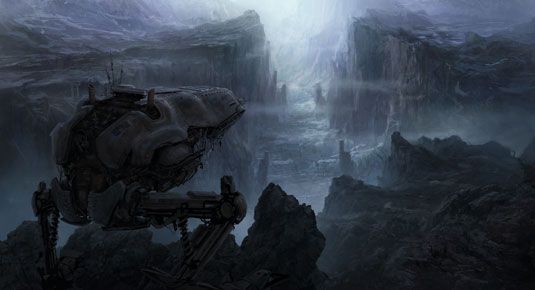
Cinematographers don’t only recreate specific images, of course; sometimes, they turn to a broader group of paintings in search of a mood no movie has managed to capture. The period film Barry Lyndon (1975) was shot by John Alcott, the gifted cinematographer behind two science-fiction classics, 2001: A Space Odyssey and A Clockwork Orange. In fact, it can be useful to think of Barry Lyndon as an sci-fi adventure set in the 18th century. To convey an era at once familiar and “other,” Alcott immersed himself in the landscapes of Thomas Gainsborough, born in 1727, as well as the caricatures of William Hogarth, born in 1697.
It was Hopper’s project to convey, in plain, realistic images, the quiet desperation of American urban life. One of the chief marvels of Hall’s cinematography is the way he not only echoes that project, but also extends it far beyond Hopper’s original scope. In some of his most striking early work (the 1967 film adaptation of In Cold Blood, for example), Hall shoots spacious, drab public spaces that would seem empty even if they were swarming with people—not unlike the spaces Hopper depicts in Early Sunday Morning (1930) or Seven A.M. (1948). But in American Beauty, released when he was in his seventies, Hall turned his calm gaze to a suburban world that was still expanding when Hopper died in the 1960s, and found alienation beyond the artist’s wildest nightmares.
William Friedkin’s ‘The Exorcist’ mirrors the paradoxical nature of René Magritte’s ‘The Empire of Lights’. The film’s play on light and darkness reflects Magritte’s exploration of reality and illusion, adding a surreal depth to the cinematic narrative.
With an almost chameleonic effort across the film’s set design, all the visual cues are set in place to transport us to a Hollywood that no longer exists… The music, like the cars, have only aged for better. Punctuating the plot, a certain Paul Revere & The Raiders record gives us a glimpse into Sharon Tate’s private life. With the first few notes of “Good Thing,” we see the actress played by Margot Robbie start to feel the groove; a rare glimpse into the personal routine of someone at the height of their fame. As she’s bobbing her head, L’automne by Alfons Mucha can be noticed in the background. Through her tastes, both musical and artistic, and art in movies, Sharon Tate becomes more than just a two-dimensional character or actress, she becomes a person.
Finally, Wes Craven’s ‘Scream’ finds its iconic mask in Edvard Munch’s ‘The Scream’. The movie’s memorable mask is a direct descendant of Munch’s agonized figure, turning a painting into a pop culture phenomenon.
Theatrical artwork
Isabella studied at the University of Cape Town in South Africa and graduated with a Bachelor of Arts majoring in English Literature & Language and Psychology. Throughout her undergraduate years, she took Art History as an additional subject and absolutely loved it. Building on from her art history knowledge that began in high school, art has always been a particular area of fascination for her. From learning about artworks previously unknown to her, or sharpening her existing understanding of specific works, the ability to continue learning within this interesting sphere excites her greatly.
Behind the scenes, theatre is a complex art form rooted in ancient traditions that continue to evolve. The foundations of theatre art were laid in Greece, but throughout history, it has adapted to reflect the changing tastes and cultural narratives of societies around the world. Modern theatre continues to explore new narratives, methods, and technology, thus constantly redefining the boundaries of performance and audience engagement. This persistent transformation keeps theatre a relevant and dynamic form of cultural commentary and creative expression.
Everyone can recognize the look of the theater stage. The lighting is dynamic with sharp contrast, the figures are starkly illuminated, and almost everything is exaggerated in some way, whether in costume or in gesture or both. The theatre carries a wonderful notion of story-telling and imagination with it that creates a framework for imagination. The dark curtains and raised platforms of the stage create the illusion that scenes that play before the viewer are in fact real, and that the audience is merely intruding on a story that would have happened regardless of whether or not they were listening in. This, to me, is the essence of the stage. In a sense, nearly all artistic arrangements of figures within a piece draw from the same principles that make up the ways in which a director would position actors within a scene. Paintings of interactions between people can be created to have an almost cinematic feel, drawing from that same notion that what is happening within the image would happen by itself, regardless of whether or not the viewer was there to see it. These images aren’t static; the events depicted are motion-oriented, and the viewer is almost always left wondering what might happen next within the scene. These works in particular create their own “stages”, where some of the details of the locale are shrouded through tenebrism or infinite space, placing more importance on the figures and their implied actions. This gallery is a collection of Renaissance and Baroque paintings that depict events happening within their own stages, alluding to the idea of being in theater.
The Old Woman Cooking Eggs is a more mundane example of theatricality within artwork, but one that is essential to completing the metaphor. Velazquez’s earlier work focused on depicting the more general aspects of daily peasant life, such as his Water Carrier piece, and The Old Woman Cooking Eggs is no exception to that. However, part of the charm of the piece in differing from Titian’s scene with Christ is that even without the blatant historical references and sheer magnitude of iconographical emotion it still possesses an equally compelling sense of theatrical narrative, regardless of how uninteresting the subject matter may seemingly be. The sharply contrasted figures are organic, and rendered precisely enough to be very believable within their setting. It is possible that this snapshot of daily life was almost more compelling to a casual viewer due to its basic relatability. The commission’s close ties to the working class suggest that this piece very intentionally references its subject matter in a natural, organic form, further increasing its ties to theatrical representation.
Film graphic
Perhaps one of the most influential movies for graphic design in film in recent times, The Grand Budapest Hotel has countless lessons for graphic designers. Ranging from skill to set design to props, the graphic design in the movie is what made it stand out. However, the most important lesson it has in store for graphic designers is about accepting failure.
Technological advancements, such as digital design and CGI, revolutionized the industry, enabling designers to create realistic and mesmerizing visual effects. Graphic design’s influence extended beyond titles, permeating set design, props, costumes, and marketing materials, resulting in a cohesive visual experience that enhances storytelling.
Renowned prop master for The Grand Budapest Hotel, Robin Miller, had the pink Mendl’s boxes printed from a specialist in Berlin for the movie. Almost every scene in the 1930’s chapter in the film used these boxes in some way. The lettering was done by hand on every single one of these boxes, which is why when Robin Miller wrote the wrong spelling of patisserie on the boxes, no digital spellchecker corrected him.
Graphic design in film is not just about creating posters and other promotional material. Graphic designers work to make movies what they are, and they are a core part of the crew. Just look at the famed graphic designer for film, Annie Atkins. She worked on creating set pieces, props to create the typeset for the hotel sign, and movie title for The Grand Budapest Hotel.
Film is a visual medium, and graphic design has always been a part of the world of visual storytelling. Graphic design has become an integral part of media in this day and age. The growing popularity can be credited to how visual social media has become.